
Britain's Palestine Ultimatum: How Gaza Forced a Historic Shift in UK Foreign Policy
After decades of postponing recognition, Britain gave Israel a September 2025 deadline. When its conditions went unmet, London formally recognised the State of Palestine.
By D. O. Abiodun — Global Scenes Reports
For decades, successive British governments maintained that the United Kingdom would recognise a Palestinian state when the timing would best contribute to peace. It was a carefully preserved diplomatic position — supporting Palestinian self-determination in principle while withholding formal recognition in practice.
That ambiguity ended on 29 July 2025.
Following an emergency cabinet meeting, Prime Minister Sir Keir Starmer announced that the United Kingdom would recognise the State of Palestine in September, before the United Nations General Assembly, unless the Israeli government took substantive steps to end the humanitarian catastrophe in Gaza and recommitted itself to a credible peace process.
The announcement marked one of the most consequential shifts in British Middle East policy in decades. For the first time, the government attached a deadline and identifiable conditions to its long-standing promise of Palestinian recognition.
"Today — as part of this process towards peace — I can confirm the UK will recognise the State of Palestine by the United Nations General Assembly in September unless the Israeli government takes substantive steps to end the appalling situation in Gaza, agree to a ceasefire and commit to a long-term, sustainable peace."— Prime Minister Sir Keir Starmer
The message to Israel was unmistakable: change course, or Britain would proceed with recognition.
The Conditions Placed Before Israel
The British government identified several measures that Israel needed to undertake to prevent recognition from proceeding in September. Israel was expected to agree to a ceasefire in Gaza; take substantive action to end the humanitarian crisis; allow the United Nations to resume large-scale delivery of humanitarian assistance; make an unequivocal commitment that it would not annex territory in the occupied West Bank; and participate in a long-term peace process capable of producing a viable two-state solution.
The government presented the announcement as an attempt to preserve a political outcome that was rapidly becoming impossible on the ground. The continued destruction in Gaza, restrictions on humanitarian assistance and expansion of Israeli settlements in the West Bank had intensified fears that the territorial foundation of a future Palestinian state was disappearing.
Separate Demands on Hamas
Starmer was careful to insist that Britain was not drawing an equivalence between the Israeli government and Hamas. The Prime Minister reiterated the UK's demands that Hamas release all Israeli hostages immediately, agree to a ceasefire, disarm and accept that it would have no role in the future government of Gaza.
Nevertheless, the structure of the announcement generated immediate controversy. The September recognition deadline was expressly connected to actions required from Israel. Although Britain maintained its demands on Hamas, Palestinian recognition was not formally made conditional upon Hamas releasing the hostages, disarming or surrendering control of Gaza.
That distinction became central to the political debate. Israel and its supporters argued that recognising Palestine while hostages remained in captivity would allow Hamas to portray international recognition as a reward produced by the attacks of 7 October 2023. Supporters of recognition offered the opposite argument: continuing to deny Palestinian statehood because of Hamas's actions would effectively give an armed organisation the power to veto the Palestinian people's right to self-determination.
Pressure from Parliament and Abroad
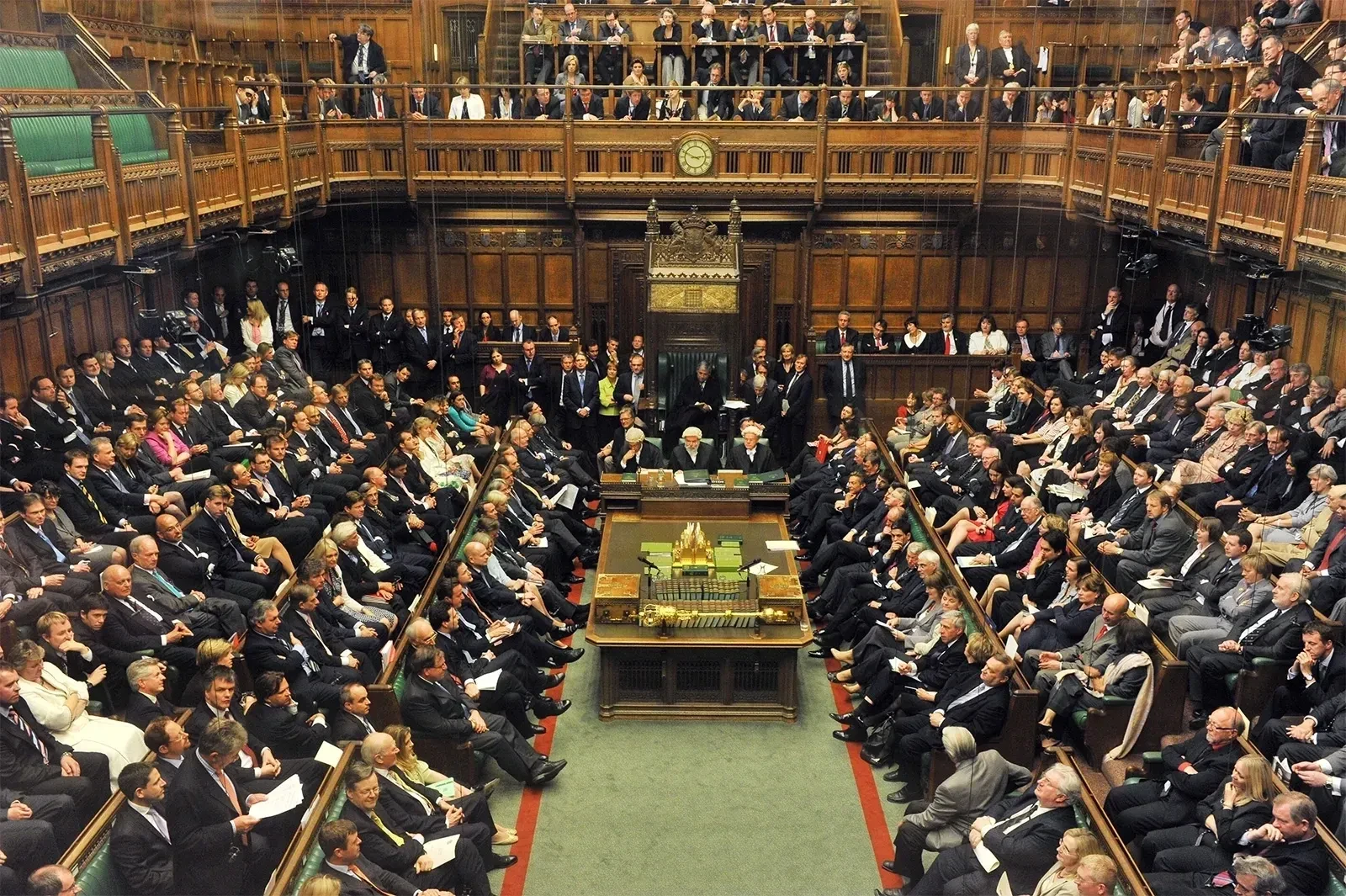
Starmer's announcement did not emerge in isolation. By July 2025, pressure had been building within the Labour Party and across the British Parliament. More than 200 MPs from nine political parties supported calls for recognition, while Parliament's Foreign Affairs Committee argued that the government should act before the opportunity for a two-state solution disappeared.
The humanitarian situation in Gaza had also become increasingly difficult for London to disregard. Reports of hunger, civilian deaths and severe restrictions on humanitarian assistance intensified public and parliamentary demands for stronger action. International developments added to the pressure: French President Emmanuel Macron had announced that France intended to recognise Palestine during the September UN General Assembly, and a high-level international conference on implementing the two-state solution was held in New York from 28 to 30 July 2025.
Recognition as a Right — or as Leverage?
The British announcement contained a difficult conceptual contradiction. If the Palestinian people possessed an inalienable right to self-determination, why should Britain's recognition of that right depend upon the conduct of the Israeli government? Conversely, if recognition was being used to compel Israel to change its behaviour, Palestinian statehood appeared to have been transformed into a diplomatic sanction.
Starmer attempted to reconcile these positions by arguing that Palestinian statehood was an inalienable right, while maintaining that the timing of recognition could still be used to protect the possibility of peace. Politically, the position was understandable. Conceptually, it remained uncomfortable. Palestinian recognition was simultaneously presented as a right, an instrument of diplomacy and a consequence of Israeli policy.
Britain's Historical Responsibility
The decision carried particular historical significance because of Britain's role in the creation of the modern political landscape of Palestine. The 1917 Balfour Declaration expressed British support for establishing a 'national home for the Jewish people' in Palestine while stating that nothing should prejudice the civil and religious rights of the territory's existing non-Jewish communities. Britain subsequently administered Palestine under a League of Nations mandate from 1920 until 1948.
Foreign Secretary David Lammy acknowledged that history, arguing that Britain's responsibility for the region extended back more than a century. For supporters of recognition, the decision represented a long-delayed attempt to address the unfulfilled Palestinian dimension of Britain's historical commitments. Critics, however, maintained that historical responsibility did not justify recognising a state before its borders, government and security arrangements had been settled through negotiations.
Israel Rejects the Ultimatum
The Israeli government reacted angrily to Britain's announcement. Prime Minister Benjamin Netanyahu accused Starmer of rewarding Hamas and argued that recognition would undermine efforts to secure the release of Israeli hostages. Israeli officials maintained that Palestinian statehood following the 7 October attacks would encourage terrorism rather than advance peace.
Britain rejected the suggestion that its decision constituted support for Hamas. Starmer repeatedly described Hamas as a terrorist organisation and insisted that it could have no role in governing a future Palestinian state. The government's intended political distinction was clear: recognising the Palestinian people and their right to statehood was not the same as recognising or legitimising Hamas.
The September Deadline Arrives
By September, the conditions identified by Britain had not been satisfied. The war in Gaza continued. The humanitarian crisis worsened. Israeli settlement expansion in the West Bank remained a serious concern. The hostages had not all been released, and no sustainable political process capable of delivering a two-state solution had emerged.
On 21 September 2025, the United Kingdom formally recognised the State of Palestine. Britain coordinated its announcement with Canada and Australia, joining more than 150 countries that already recognised Palestinian statehood. Starmer said the decision had been taken 'to keep alive the possibility of peace and a two-state solution.'
The recognition referred provisionally to Palestinian territory occupied by Israel during the 1967 conflict, including the West Bank, East Jerusalem and Gaza. Britain maintained that final borders would have to be determined through negotiations and mutually agreed territorial exchanges. The UK also reaffirmed that a future Palestinian state should be governed by a reformed Palestinian Authority, not Hamas.
Historic, but Largely Diplomatic
Recognition did not immediately create a fully sovereign Palestinian state. It did not remove Israeli forces from occupied territory, determine permanent borders, end the war in Gaza or give Palestine full membership of the United Nations. Full UN membership still required approval from the Security Council, where the United States retained veto power.
Nevertheless, recognition carried substantial diplomatic and political significance. It meant that Britain formally accepted Palestine as a state rather than merely as a territory awaiting a negotiated political future. It also opened the way for fuller diplomatic relations and strengthened the international legal and political standing of Palestinian representatives.
Most importantly, the decision reversed Britain's long-held argument that recognition should wait until a peace process had reached the appropriate stage. By September 2025, Britain had reached the opposite conclusion: waiting indefinitely was no longer preserving the two-state solution — it was helping to extinguish it.
A Recognition Born from Failure
Britain's decision was historic, but it was not a declaration of diplomatic success. It emerged because negotiations had failed, the humanitarian catastrophe in Gaza had deepened and confidence in the survival of the two-state solution had deteriorated.
For Palestinians, recognition represented international affirmation of a right repeatedly promised but never fully realised. For Israel, it was perceived as coercive diplomacy and an unjustified concession while Hamas still held hostages. For Britain, it represented an attempt to reconcile its historical responsibility, its alliance with Israel, its opposition to Hamas and its declared commitment to Palestinian self-determination.
The deeper significance of the decision lies in the principle it established: Palestinian statehood could no longer be postponed indefinitely while developments on the ground made that state increasingly impossible. Britain's September 2025 recognition did not create peace. It did, however, end one of the longest-standing ambiguities in British foreign policy — and acknowledge that a two-state solution cannot survive if only one of those states is permitted full international recognition.
D. O. Abiodun — Global Scenes Reports, 25 September 2025